26 UpSet Plots by Group
27 Interpretation
The group-based UpSet plots provide a visual summary of probe-level overlap across tumor comparisons, offering a proxy for biological coherence or divergence within cancer categories. When integrated with the theoretical framework of increased complexity and entropy in cancer progression, these plots help reveal patterns of shared dysregulation — or its absence — across related tumor types.
Key insights:
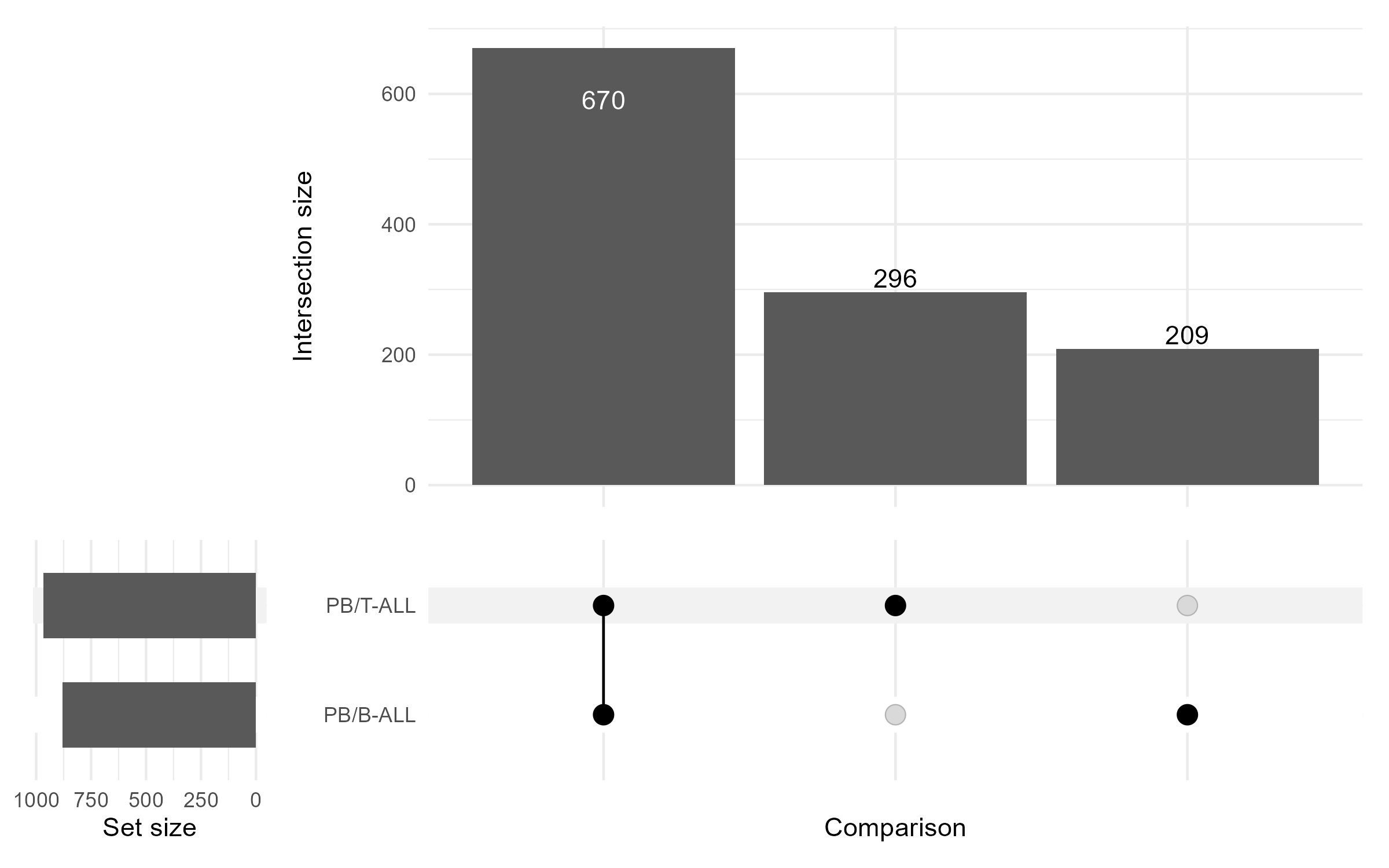
Leukemias show high probe overlap (209 probes) across T-ALL and B-ALL (from two platforms), suggesting low entropy and reduced complexity — reflecting lineage-restricted transcriptional programs.
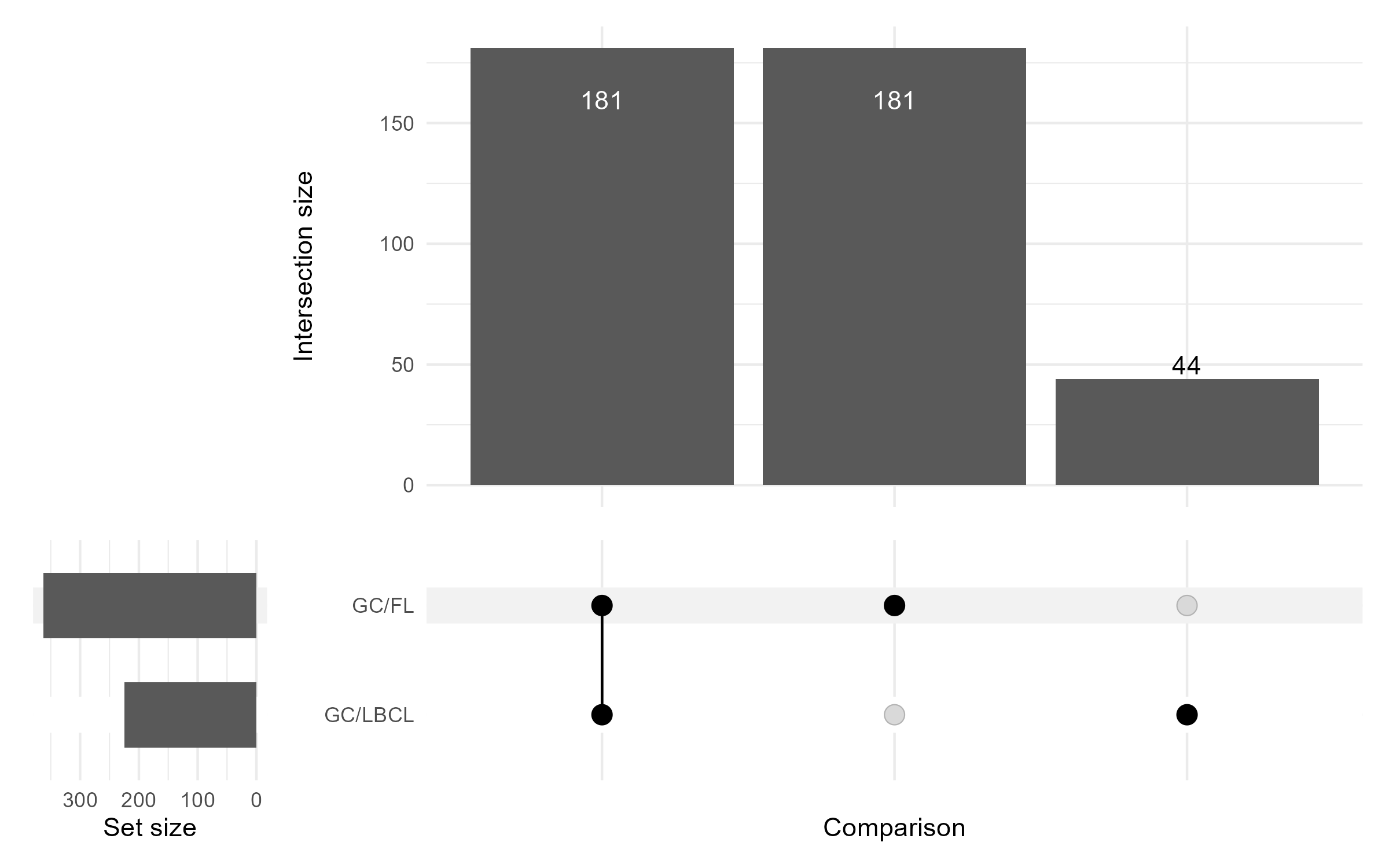
Lymphomas exhibit high overlap (181 probes) within one chip, implying low-complexity, convergent transcriptional programs typical of B-cell malignancies.
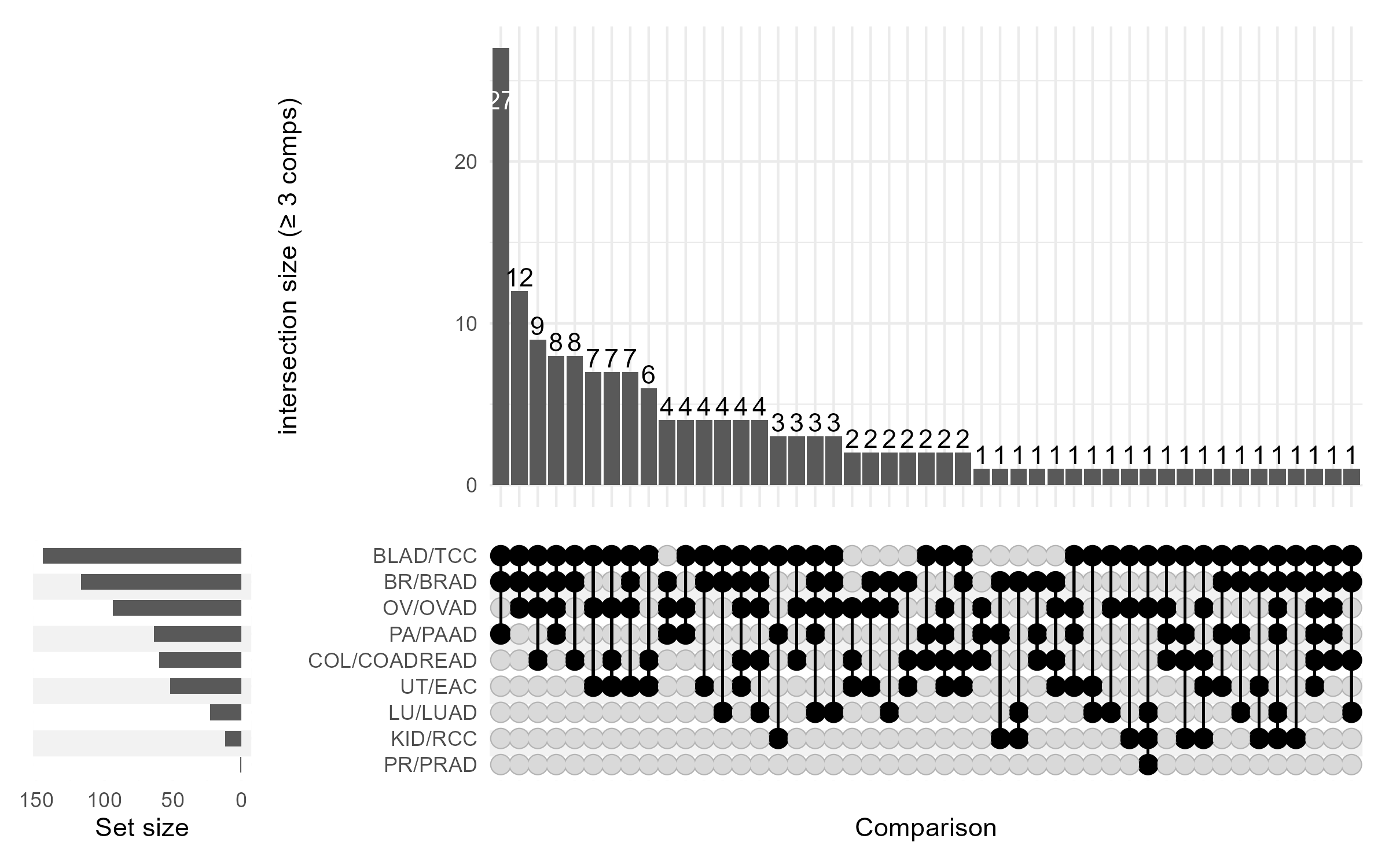
Carcinomas show minimal sharing — with only 27 probes across TCC, BRAD, and PAAD — and none shared across all 9 carcinoma comparisons, indicating higher entropy and greater complexity due to heterogeneous epithelial origins.
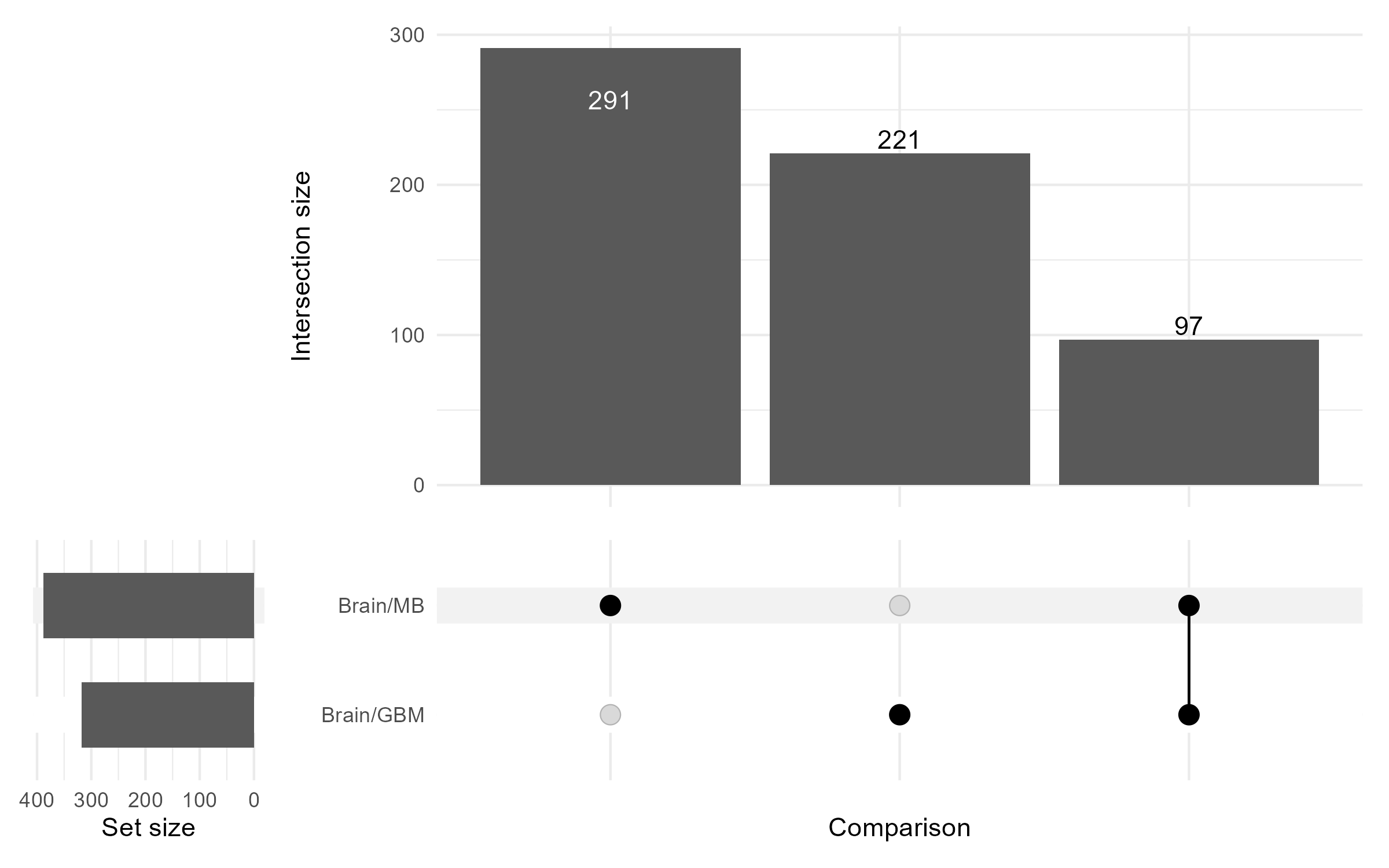
Blastomas (e.g., neuroblastoma and medulloblastoma) show a moderate overlap (97 probes), suggesting intermediate complexity from developmental misregulation.
These UpSet plots do more than visualize overlaps — they encode informative signals about biological coherence. High overlap implies tightly coupled, low-complexity systems; low overlap suggests divergent, high-entropy systems — in strong alignment with the proposed theoretical model.